

A Michigan bird feeder has a steady, predictable rhythm. While the exact dates may shift by a week or two depending on the weather, the patterns repeat year after year. Once you learn this seasonal cadence, you'll know exactly what to offer, when to put it out, and why certain birds seemingly vanish in late summer.
Note: This guide is written from the perspective of the southern Lower Peninsula. If you live north of Clare, expect spring to trail by a week or two and fall to arrive slightly earlier. The Upper Peninsula runs closer to three weeks behind. A particularly cold March can push these timelines back across the state.
January
January is a quiet, survival-focused month at the feeder. With short days and biting cold, birds are highly motivated to eat. You'll see Dark-eyed Juncos, which arrive in the fall and stay through the winter, foraging on the ground alongside American Tree Sparrows (here from November to March). Scatter seed directly on the snow for them.
In the bare woods, Great Horned Owls hoot to claim their winter territories. While you won't see Snowy Owls in a typical yard, they do appear some winters hunting in flat, tundra-like agricultural fields. Snow Buntings can be seen swirling over country roads, and Bald Eagles regularly fish in open water.
February
The weather remains bitterly cold with deep snow, but subtle shifts begin. The crisp song of the Northern Cardinal cuts through the chill. Great Horned Owls, which don't build their own nests, appropriate old hawk or crow nests and begin incubating eggs right in the snow.
Now is the time to clean and mount your nest boxes so they are ready for early arrivals. Red-winged Blackbirds are among the first to return, pushing back in late February or early March. The males arrive first, flashing their red shoulder epaulets in the marshes to claim territory. While they rarely visit seed feeders, they are a sure sign spring is nearing. Keep your feeders well-stocked; the intense cold requires birds to burn massive amounts of energy to stay warm.
March

March is still winter most days. Expect snow on the ground, hard freezes at night, and a few thaws that turn the yard to mud. Red-winged Blackbirds arrive in larger numbers, their calls ringing out from the wetlands. Sandhill Cranes and Eastern Bluebirds also return, though a hardy few may successfully overwinter during mild years.
While flocks of American Robins often winter deep in Michigan swamps eating leftover fruit, the first robin you see actually pulling a worm from a thawed patch of lawn is the true harbinger of spring. American Tree Sparrows start leaving for the tundra late in the month, though the juncos linger a bit longer. Pick a mild day to clean your feeders, and keep them full. The cold snaps are not over.
April
The snow clears and the yard transforms. Tree Swallows return, sweeping through the air in wide circles to catch insects. American Goldfinches begin their spring molt, dropping their drab winter feathers for bright yellow ones. They look patchy and unkempt while it happens. The last of the Dark-eyed Juncos fly north to deep forests.
Ruby-throated Hummingbirds typically arrive in the final days of April or early May. Put your nectar feeders out late in the month using a simple ratio of one part white sugar to four parts water. Never use red dye; the birds don't need it, and it can be harmful. The yard becomes fiercely territorial as Chickadees and Eastern Bluebirds begin carrying dry grass and pine needles into nest boxes.
May
May marks the chaotic peak of spring migration. The trees leaf out, and Baltimore Orioles arrive. These loud, brilliant orange birds can be lured to your yard with orange halves or small dishes of grape jelly, which they will visit constantly.
House Wrens return and immediately begin competing aggressively with Tree Swallows for nest boxes. You can ease the tension by putting up multiple boxes, provided they are spaced far apart. With temperatures rising, you must clean both your hummingbird and jelly feeders frequently to prevent the sugar from spoiling.
June

Nesting season is in full swing, and the yard is loud with demanding fledglings. Bluebirds and chickadees work relentlessly from sunrise to sunset, carrying insects to their young.
Hummingbirds drain nectar feeders rapidly, requiring you to refill and clean them often in the summer heat. Baltimore Orioles will abruptly stop visiting the jelly feeders; their dietary needs shift entirely to hunting protein-rich insects to feed their growing chicks, though you may still spot them moving through the canopy.
July
The midday heat quiets the yard as birds rest in the shade. Early nesters are already parading their fledglings around; look for young bluebirds fluttering their wings and begging for food. American Goldfinches are just getting started. They deliberately wait until mid-summer when thistles go to seed, using the soft down to line their nests and the seeds to feed their young.
Young hummingbirds leave the nest and join their parents at the nectar feeders, emptying them faster than ever. By the end of the month, the adult birds of all species begin to look ragged and exhausted from the demands of rearing chicks.
August
Feeder traffic plummets. This sudden drop in August and September often worries backyard birders, but it is entirely natural. The wild food supply peaks; woods and fields are overflowing with seeds, berries, and insects, making your feeders temporarily unnecessary.
Adult birds also enter their late-summer molt. They hide in the brush to drop old feathers and grow new ones. It is perfectly normal to see a Northern Cardinal looking completely bald during this time. Migration begins quietly: male Ruby-throated Hummingbirds head south first, followed by the Baltimore Orioles, leaving the yard feeling suddenly empty.
September

The days shorten and the weather cools. Most Ruby-throated Hummingbirds depart by late September, though a few stragglers wait until early October. Leave your nectar feeders up for two weeks after you see the last bird. Leaving the feeder out does not prevent them from migrating; it simply offers a vital resting stop for late travelers.
Flocks of Cedar Waxwings move through the trees. They ignore seed feeders entirely, opting instead for wild berries. Listen for their high-pitched, trilling calls in the branches. Blue Jays also migrate through in large, loud lines over the canopy. As wild food begins to dwindle and resident birds finish their molts, feeder traffic slowly starts to pick up again.
October
Frost arrives, and the leaves drop, opening up the sightlines in the woods. Dark-eyed Juncos return from the north to spend the winter hopping under your feeders.
Once the last hummingbirds leave in early October, take down and wash the nectar feeders for the season. This is also the time to clean out your nest boxes. Pull out the old material and brush them clean so they sit empty and ready for spring. Fill your main feeders with black oil sunflower seed and scatter white millet on the ground for the juncos. The birds feed heavily now to survive the dropping nighttime temperatures.
November

The ground freezes gray and cold. American Tree Sparrows arrive to join the juncos on the ground. You can tell them from Chipping Sparrows by the dark spot in the middle of the chest.
Routines set in. Chickadees dart in to grab a single seed, flying to a nearby branch to hammer it open. Woodpeckers frequent the suet blocks, which should be put out now that the cold prevents the fat from melting. Keep the seed dry, and expect a heavy rush of feeding activity in the late afternoon as birds stock up for the long night.
December
The landscape is dark and snow-covered. The winter hierarchy is established. Snow Buntings forage in farm fields, Bald Eagles hunt near the rivers, and Great Horned Owls call to one another through the bare trees.
Juncos and tree sparrows are the first at the feeders each morning. Cardinals are often the last to leave at dusk, their red feathers glowing brightly against the snow. As the birds fluff their feathers to trap body heat against the freezing dark, you fill the feeders one last time, knowing the rhythm will start all over again tomorrow.
A few rules that hold all year
- Hummingbird Feeders: Put them out in late April. Take them down two weeks after you see the last bird in the fall.
- Nest Boxes: Mount them in February or March. Clean them out entirely in October.
- Bear Safety (Northern Michigan): If you live in bear country, you must take your feeders down in the spring. Bears will move on once the woods green up with natural food. If a bear continues to return to a yard with no food for two or three weeks, contact the DNR.
Related reading: Winter Birds of Michigan: Who Stays and What to Feed Them · Woodpeckers of Michigan: All 9 Species and How to Attract Them
From our shop
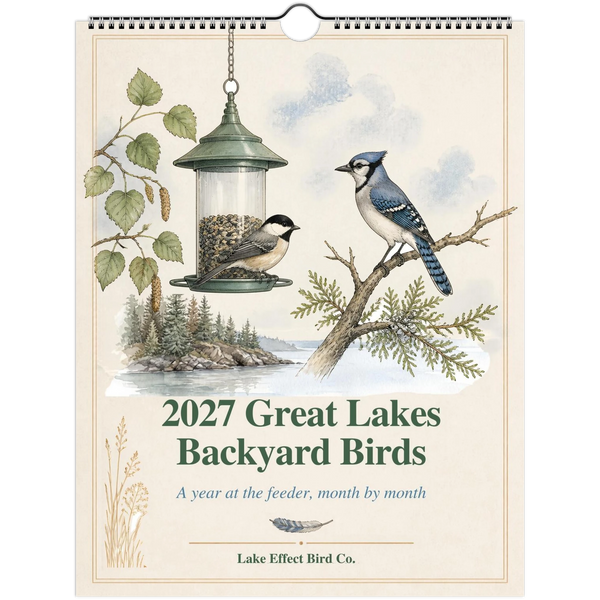
The same rhythm, on the wall and in the mail.


Sources
- Michigan DNR, Winter Birding Opportunities
- Michigan DNR, Spring weather has bears on the move: remove bird feeders, other attractants
- Michigan Audubon, Winter Bird Feeding Tips
- Michigan Audubon, Fall Migration: Viewing Sandhill Cranes in Michigan
- Cornell Lab of Ornithology, All About Birds: Baltimore Oriole, American Goldfinch, Dark-eyed Junco, Great Horned Owl, Ruby-throated Hummingbird, Red-winged Blackbird, Cedar Waxwing, Tree Swallow, Snowy Owl
- Audubon, How to Make Hummingbird Nectar
- NestWatch, Cleaning out nest boxes
- Hummingbird Central, Hummingbird FAQs
- Journey North, Late Travelers
- Finch Research Network, Winter Finch Forecast 2026–2027